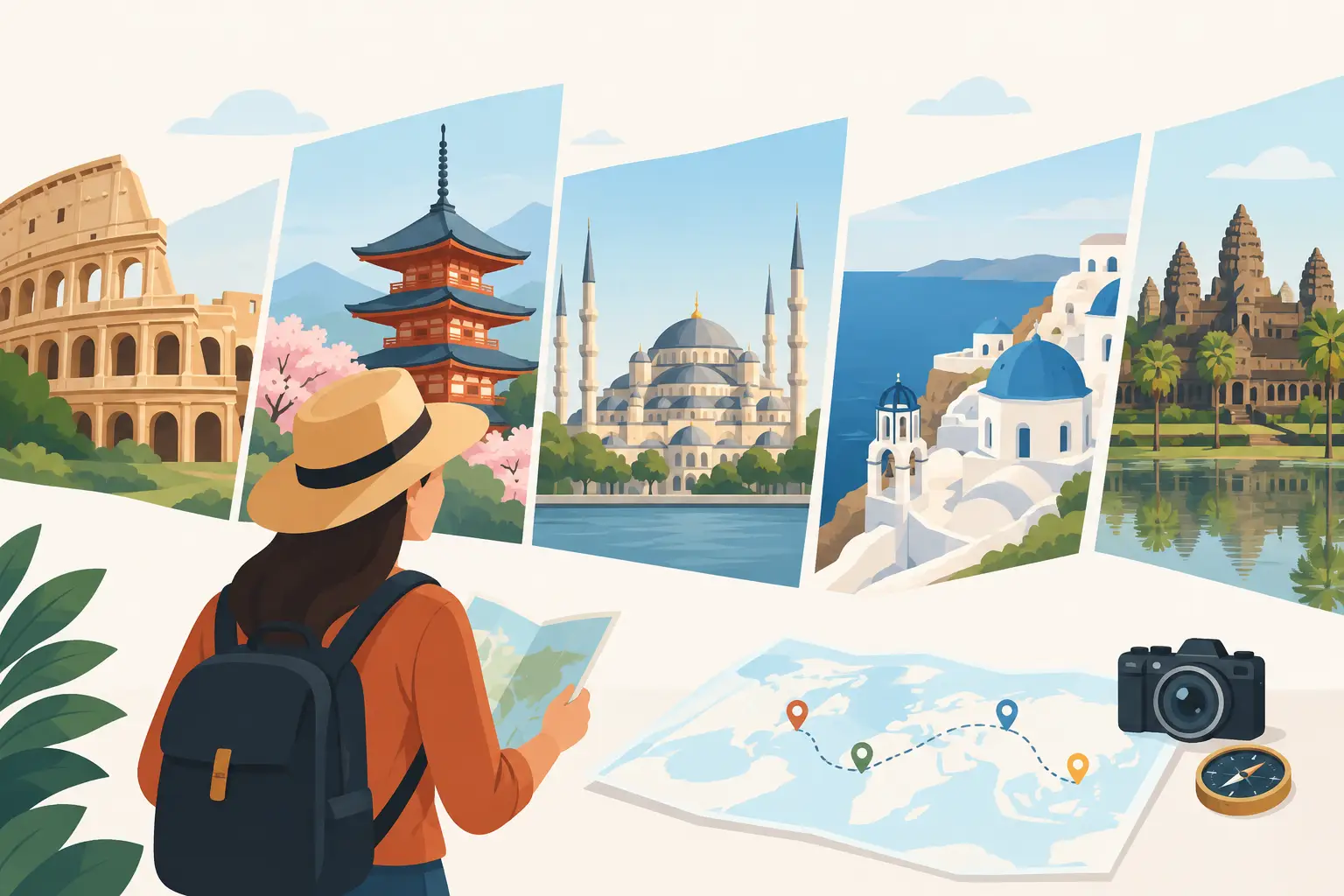
A great trip is rarely defined by how many sights you checked off. It is the moment a local guide explains the story behind a temple carving, the family-run meal you still talk about months later, or the unhurried walk through a neighborhood most visitors miss. The best cultural itinerary examples create space for those moments while ensuring the essential landmarks, transportation, and timing are handled with care.
Cultural travel does not mean filling every hour with museums or historical lectures. It means giving a destination enough context to become personal: its food, faith, architecture, traditions, daily rhythms, and living communities. For travelers who want meaningful discovery without the stress of building every detail alone, the right itinerary balances structure with room to absorb what is in front of you.
What Makes a Cultural Itinerary Feel Meaningful?
A cultural itinerary should have a clear rhythm. Start with the defining places that help you understand a country or region, then move beyond them through local encounters that reveal how people live today. A visit to the Pyramids of Giza is more rewarding when it is paired with time in a Cairo market, a conversation about contemporary Egyptian life, and meals that introduce regional flavors.
Pacing matters just as much as content. Seeing four major sites in a day may look impressive on paper, but it can turn a remarkable place into a blur. Thoughtful planning usually allows one major focus each day, with complementary experiences nearby. That might mean a palace and a neighborhood food walk, or a UNESCO-listed site followed by a small artisan workshop.
Local guidance is another essential ingredient. Guidebooks can provide facts, but an experienced local guide can explain etiquette, answer questions with nuance, and help travelers see beyond the surface. This is particularly valuable in destinations where history is layered, religious customs shape daily life, or language barriers can make independent travel feel limiting.
Three Cultural Itinerary Examples to Inspire Your Trip
The following cultural itinerary examples show how landmark experiences and local connection can work together. They are not meant to be copied hour by hour. Instead, they illustrate the balance that makes a guided journey feel both well organized and genuinely immersive.
Example 1: Egypt in Eight Days – Ancient Wonders and Modern Cairo
Begin in Cairo with enough time to settle in before exploring the Egyptian Museum and the historic streets of Islamic Cairo. Rather than treating the city as a quick gateway to the pyramids, include a local meal and a walk through Khan el-Khalili to experience its energy, craftsmanship, and long-standing trading culture.
The next day can focus on Giza, Saqqara, and Memphis. These sites tell a broader story than the pyramids alone, showing how ancient Egyptian civilization developed across different eras. A knowledgeable guide is especially helpful here, turning monumental stone structures into a coherent human history.
Fly south to Luxor for several days of temple complexes, tombs, and time along the Nile. The Valley of the Kings and Karnak Temple deserve unhurried visits, but the quieter moments matter too: watching rural life from a boat, learning about local customs, or sharing a relaxed dinner after a full day. The itinerary ends in Aswan, where Nubian culture, the river landscape, and a slower pace offer a graceful contrast to Cairo’s intensity.
The trade-off in Egypt is distance. Trying to cover Cairo, Luxor, Aswan, Alexandria, and the Red Sea in a single short trip can feel rushed. For a first journey, prioritizing Cairo and the Nile Valley usually provides more cultural depth than adding every possible stop.
Example 2: Morocco in Ten Days – Imperial Cities, Mountains, and Desert Traditions
A well-paced Morocco itinerary might begin in Casablanca and Rabat, then continue to Fes, where ancient medina lanes, tanneries, mosques, and artisan traditions reveal a world shaped by centuries of trade and scholarship. Fes rewards travelers who move slowly and have a guide who can make its maze-like streets feel approachable rather than overwhelming.
From there, travel through the Middle Atlas toward the Sahara. The drive is part of the experience, bringing changing landscapes, Berber communities, and small towns into view. An overnight desert stay offers more than dramatic scenery when it includes context about the region’s nomadic heritage, music, and hospitality.
Finish in Marrakech, balancing its iconic square and gardens with a deeper look at its craft traditions and food culture. A cooking experience, visit with an artisan, or guided walk through a less-touristed quarter can be more memorable than another round of shopping in the souk.
Morocco presents a useful planning choice: travelers can spend more time in the cities or make room for the desert and mountain routes. Both are worthwhile, but the stronger itinerary does not pretend there is no distance involved. Building in comfortable travel days and carefully chosen overnight stops protects the experience from becoming a long series of transfers.
Example 3: Japan in Nine Days – Heritage, Ritual, and Everyday Life
Japan is an excellent destination for travelers who value both precision and surprise. Start in Tokyo, where centuries-old shrines coexist with contemporary design, lively food halls, and quiet residential streets. A guided neighborhood walk can reveal details that are easy to overlook, from the etiquette of shrine visits to the character of small local businesses.
Continue to Kyoto for temples, gardens, traditional districts, and an introduction to the rituals behind tea, cuisine, and seasonal celebrations. It is tempting to schedule every famous temple, but Kyoto is more rewarding when visitors choose a few significant sites and leave time for contemplative walks, a market visit, or a meal focused on regional specialties.
A day in Nara or a stay in a smaller town adds valuable perspective. This is where an itinerary can shift from famous imagery to a closer understanding of Japanese daily life and regional identity. End back in Tokyo or continue to Hiroshima, depending on interests and available time.
Japan’s excellent rail system makes independent movement possible, but ease of transportation does not automatically create cultural understanding. Travelers who want support with logistics, etiquette, and meaningful local context often find that a small, well-led group creates a more relaxed and rewarding experience.
How to Build a Better Cultural Journey
When comparing tours or planning your own trip, look beyond the destination list. Ask what each day is designed to help you understand. A strong itinerary should connect major attractions to the people, traditions, and places around them.
Consider these practical questions: Is there enough time at key sites? Are travel days realistic? Does the route include local meals, neighborhood experiences, or artisan traditions alongside headline landmarks? Is there free time to rest or follow a personal interest? These details separate a cultural journey from a tightly scheduled sightseeing program.
Group size also changes the experience. Smaller groups can move more easily through old city streets, dine in intimate local restaurants, and ask more questions of guides. They also allow for a more personal pace when weather, crowds, or individual interests call for flexibility. Atlas Global Tours keeps groups small so travelers can experience renowned sites with the attention and care they deserve, without feeling like part of a crowd.
Choose Depth Over a Checklist
The most satisfying itineraries leave room for discovery without leaving travelers to manage complicated logistics on their own. You may remember the grand monuments, but often it is the unexpected conversation, the regional dish, or the guide’s personal story that gives a place lasting meaning.
Choose an itinerary that gives you confidence in the planning and permission to be present once you arrive. That is where cultural travel becomes more than a vacation: it becomes a connection you carry home.